Site Area 1000 sqm
Floor Area 420 sqm
Design: 2020-2025
In a Tel Aviv residential neighborhood characterized by modest private houses dating back to the 1950s, a new dwelling was conceived in dialogue with the values of local historic modernism.
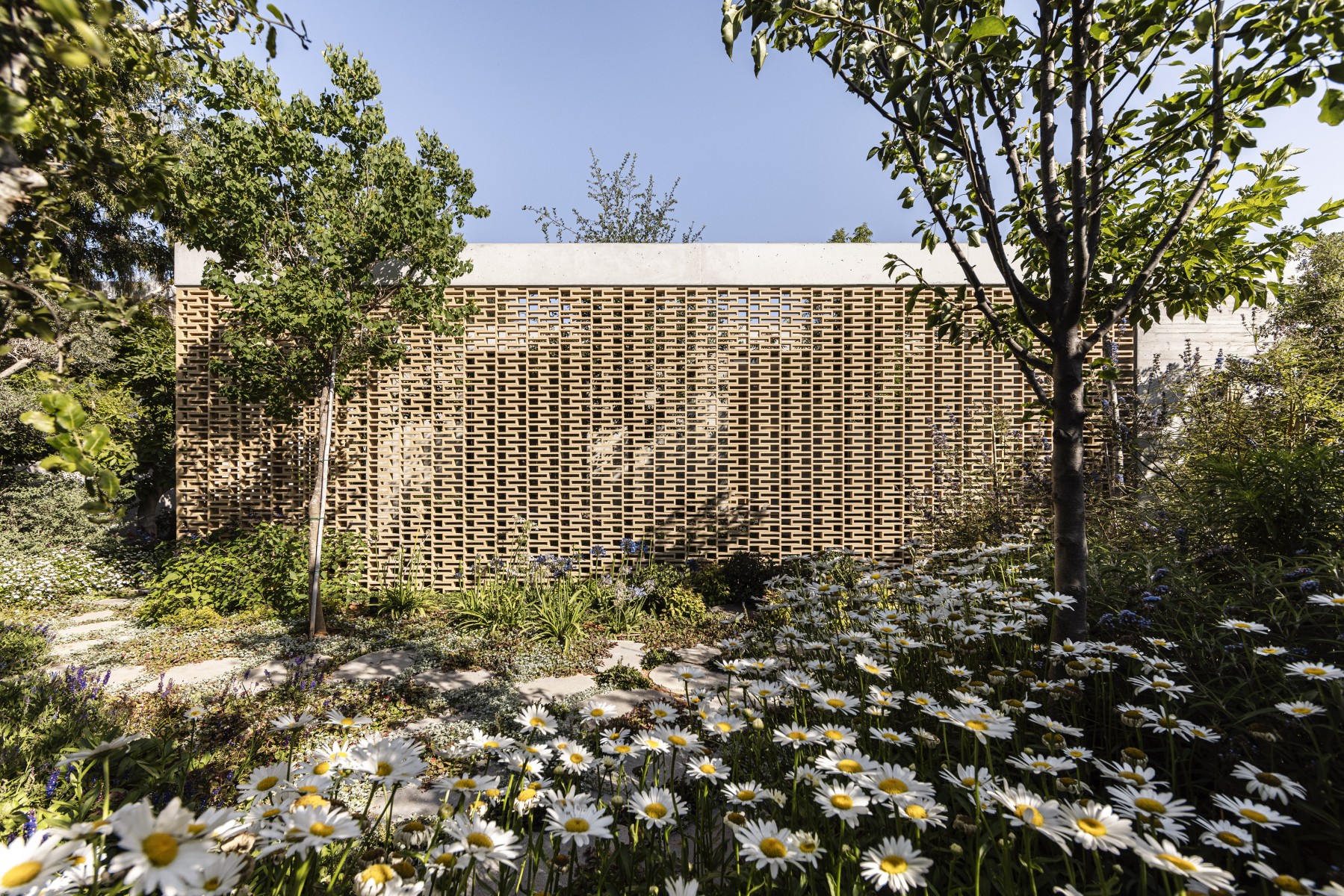
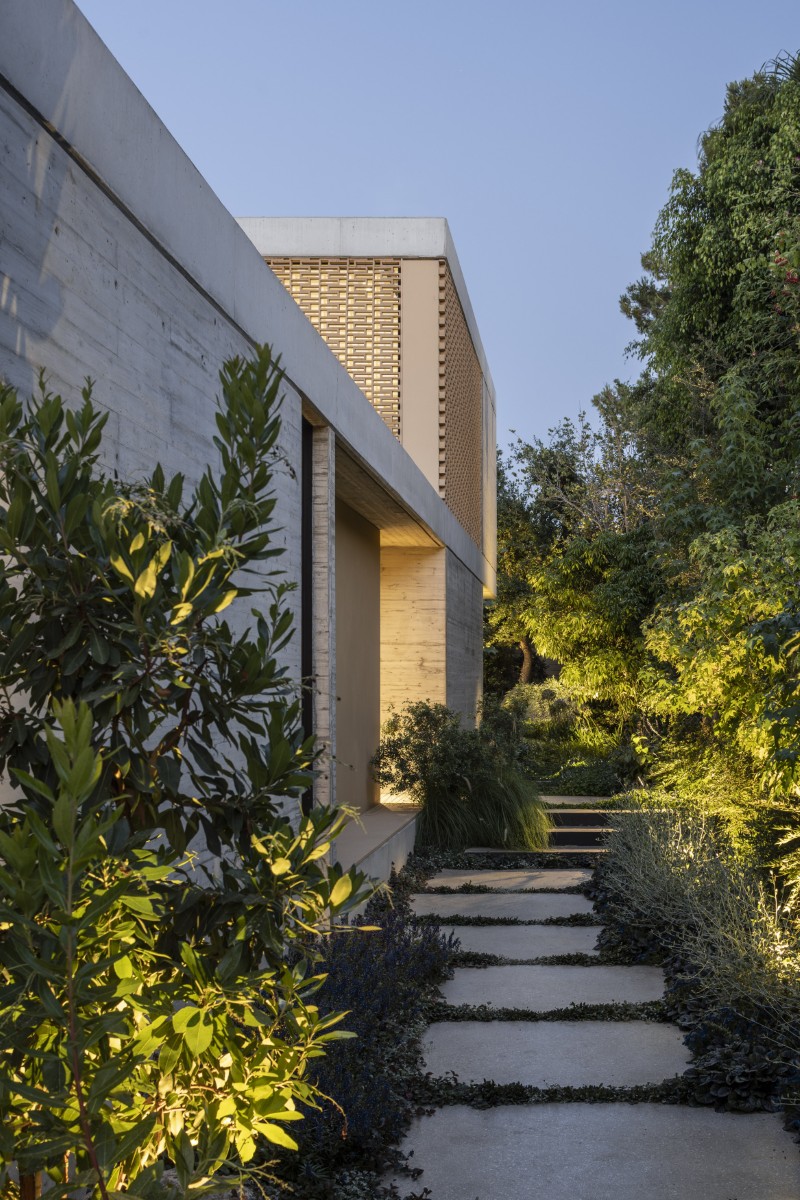
The design responds to the spirit of the original urban fabric, presenting a restrained, minimalist façade to the street. The proportions of the plot enabled the placement of a discreet, single-story volume fronting the street, separated from it by a forecourt patio enclosed with a delicate lattice.
Deeper within the site, beyond an additional central patio, stands the taller, two-story mass. At the far end lies the backyard and swimming pool. Between the central patio and the backyard is situated the home’s public wing. The patios, along with areas of the façades, are enveloped by a terracotta screen of perforated bricks, fabricated specifically for the project as precast structural elements. Widely employed in the modernist architecture of 1950s Israel, these screens afford both privacy and a vegetated buffer for the rooms facing the street. A low fence, softened with planting, delineates the property line while fostering connection rather than separation.
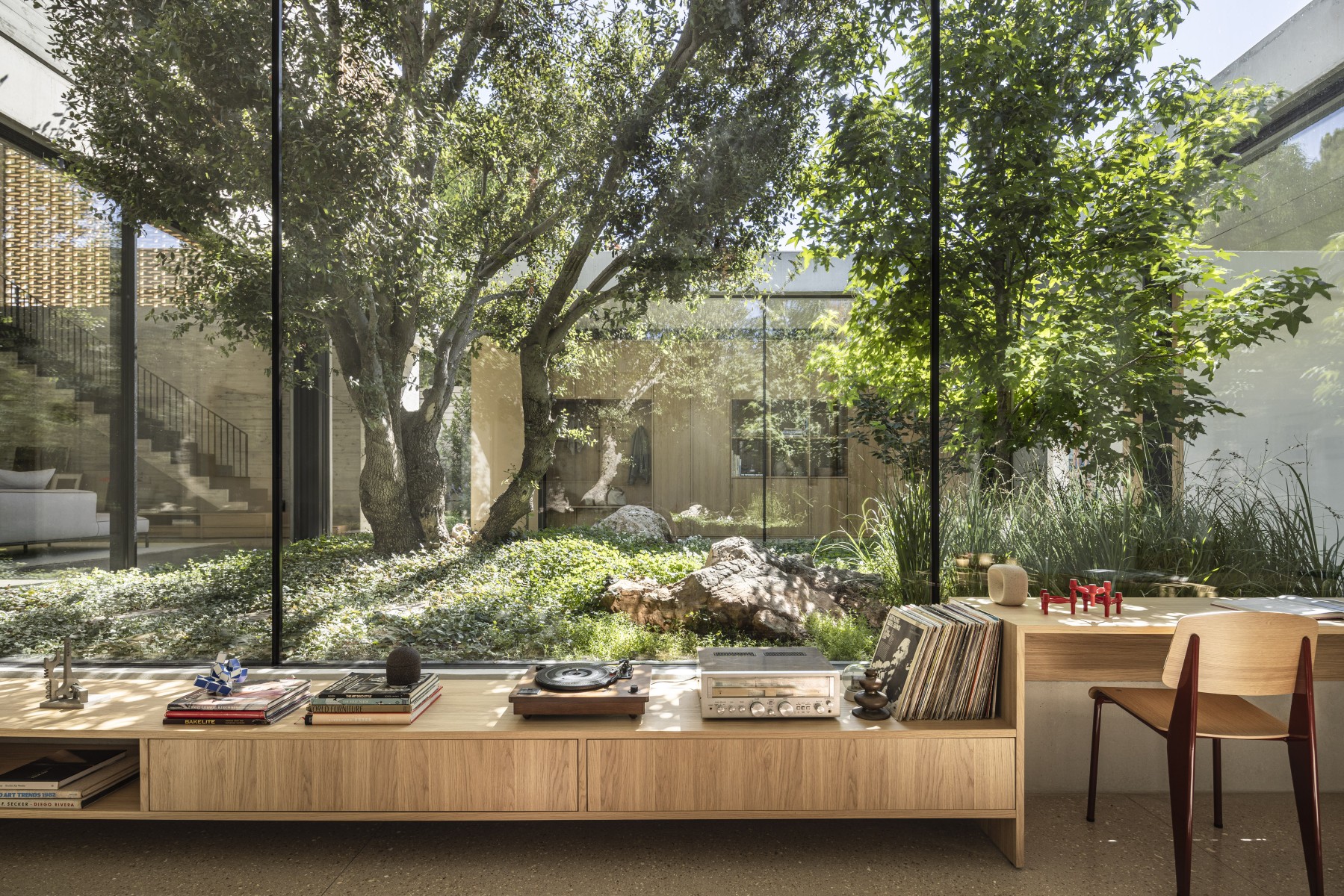
The house is composed as a sequence of layers, articulated through the series of patios. Each courtyard mediates a threshold: between dwelling and street, between low and high volumes, and between private and public. Climatically, the patios accommodate the shifting conditions of the day, enabling a variety of shaded exterior spaces.
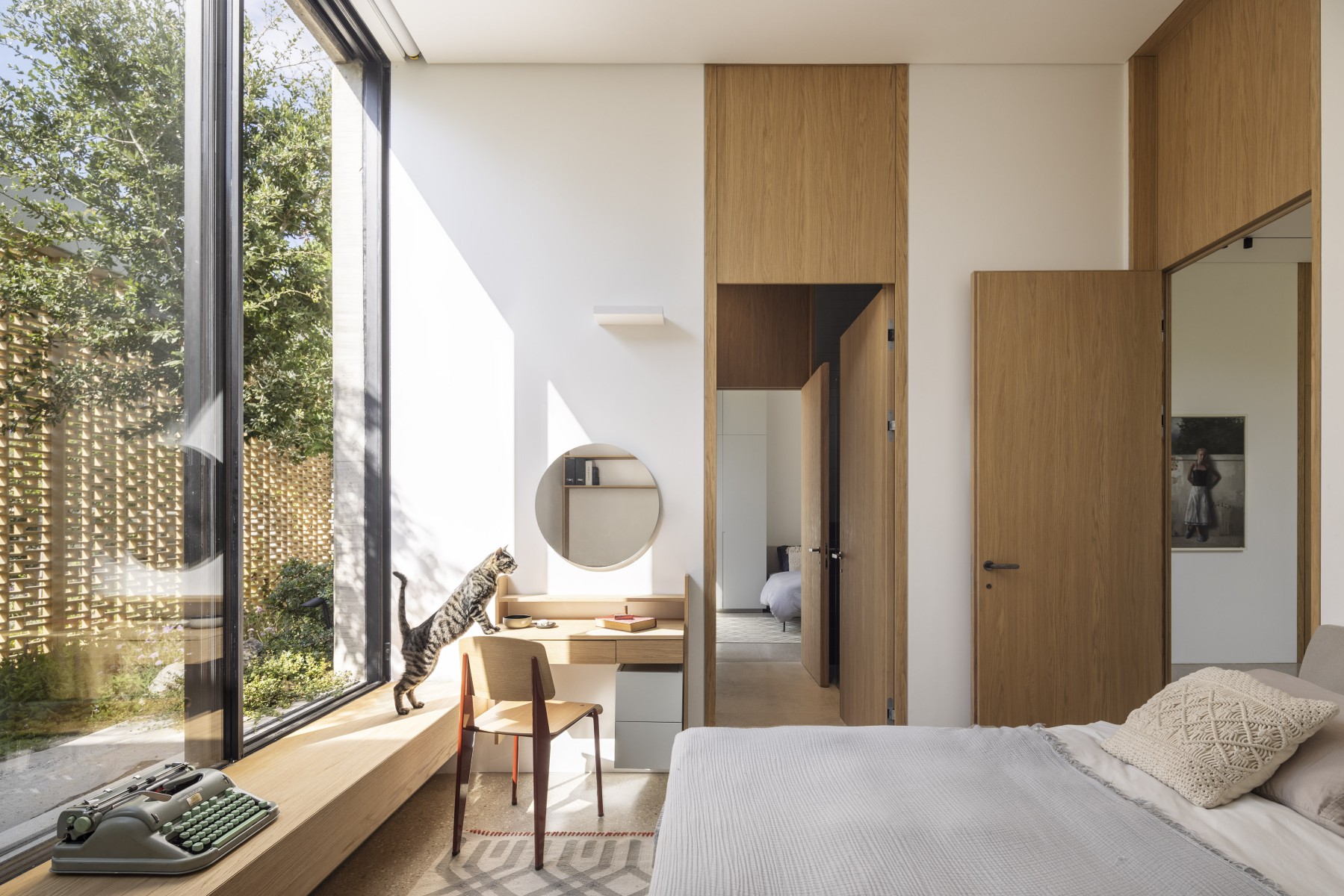
The central patio further establishes a sectional division between the private and public wings. The bedroom wing is set slightly lower than the communal areas and patios, reinforcing both privacy and autonomy. A ramp and short flights of steps enable a continuous circulation loop around the central patio—still within the house’s interior envelope. Visual connections are maintained across different levels, subtly filtered through vegetation and the terracotta latticework.
On the upper floor of the rear wing are located the study and master suite, which incorporates an additional elevated patio. Both spaces overlook the backyard. Access is provided by a bridge across the double-height living space, reached via a suspended concrete staircase. Here too, visual continuity binds the various parts of the house.
Materiality is deliberately reduced to the essentials: polished concrete floors, exposed concrete walls, and terracotta brick screens. This palette underscores the ethos of modernism while grounding the house in its Mediterranean context.
Sunlight filtering through the perforated terracotta creates soft, changing patterns inside the house. The carefully placed patios let this filtered light enter and transform the atmosphere throughout the day and across the seasons. Each day feels a little different, as the shifting light and shadow blend with the natural materials of the house, giving the sense that it has always belonged to its surroundings.
Lead Architect: Avital Shenhav-Shani
Lighting design: Orly Avron-Alkabes
Photography: Amit Geron
Project Management: A.Lupo